Designing a new system to track, manage, and ship airline ballasts to ensure airline safety and cost reduction.
Project
United Airlines Ballast Management Tool
Client
United Airlines
My Role
Lead UX/UI Designer and Researcher
Timeline
8 months
Overview
The Problem:
United Airlines was losing an estimated 5-10 aircraft ballasts every single day. Whether these critical components were misplaced, broken, or “borrowed,” the missing equipment exponentially raised annual operational costs and introduced potential risks to overall airline safety. At the time, tracking relied solely on manual emails and physical notes handed to flight crews. This outdated system caused frequent miscommunication during hand offs, creating an urgent need for a modernized solution to ensure safety, improve flight readiness, and drastically reduce costs.
The Solution:
To resolve these tracking and communication issues, the strategy was to modernize the entire workflow by equipping all United Airlines ballasts with RFID tags. While the backend technology was in place to scan and log these tags, a comprehensive tracking system was required to actually manage the inventory. The solution was to build a robust, real-time ballast management tool that could translate this raw RFID data into an intuitive visual dashboard. By providing real-time data updates and accessible tracking interfaces for both flight operations and ground crews, this new system was designed to eliminate manual handoffs, drastically reduce manual entry errors, and ensure faster, more accurate pre-flight preparations.
My Contributions
Who I worked with:
United Airlines regional managers, hub managers, and tarmac managers
User interviews, persona creation, and user requirements gathering
United Airlines engineers/devs
Process mapping, technical requirements gathering, and design feasibility testing
United Airlines product owner and product manager
Design requirements verification, journey map creation, and stakeholder requirements gathering
Executive leadership
Stakeholder presentations, persona share out, and design scalability long term planning
What I did:
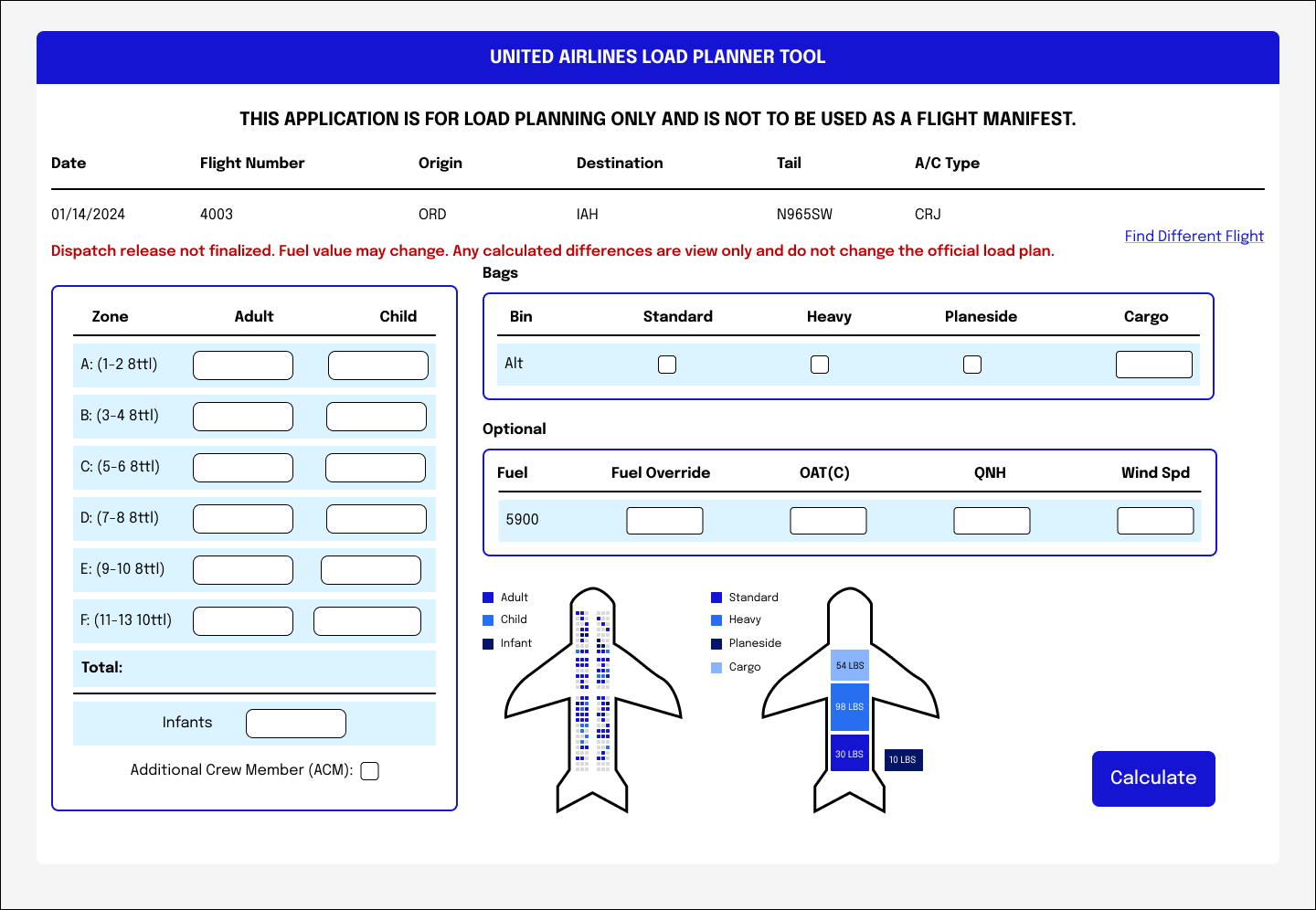
I led the end-to-end UX design for the ballast tracking platform, driving the entire lifecycle from foundational research to final execution. My work included generating five detailed user personas and building a tailored design system to ensure the experience remained consistent and scalable. To replace their manual handoffs, I designed eight data-rich dashboards and three mobile interfaces with distinct access levels: streamlining workflows for tarmac workers physically loading the ballasts, hub managers coordinating movement within airports, and regional managers handling overarching requests across multiple hubs. Balancing a high-stakes aviation environment with direct user feedback, I focused on clarity and a high standard of craft. Ultimately, I helped shape an intuitive system that reduces manual entry errors by over 40% and ensures accurate weight and balance calculations across the fleet.
Key deliverables:
-
Replacing manual paper handoffs required mapping out the exact chain of command and varying access needs across the airline. I developed these personas to clearly differentiate responsibilities and system access. For example, Tarmac Workers needed access to log physical loading and make flight safety quantity recommendations. Hub Managers needed oversight to track airport inventory, handle physical upkeep, and answer acquisition requests. Finally, Regional Managers needed a macro view to coordinate transport and acquisitions across multiple hubs. Defining these distinct roles was crucial to ensure the final system only surfaced relevant data to each specific user.
-
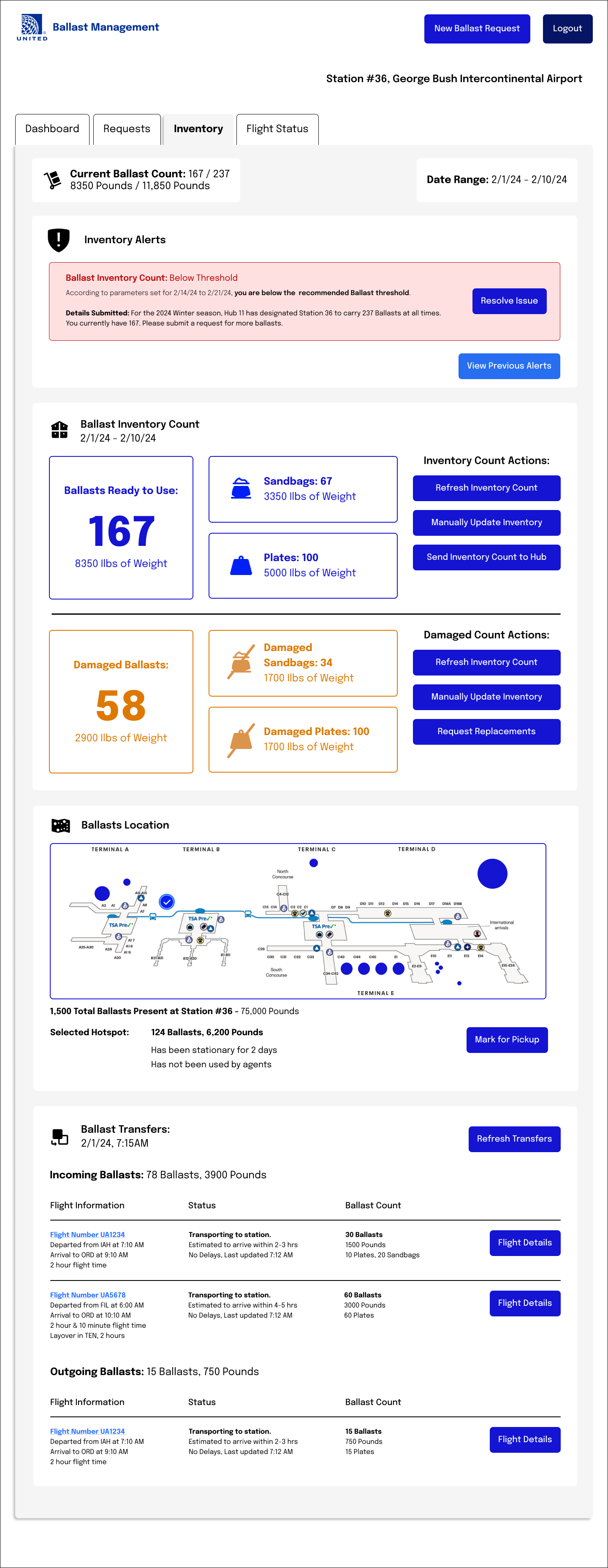
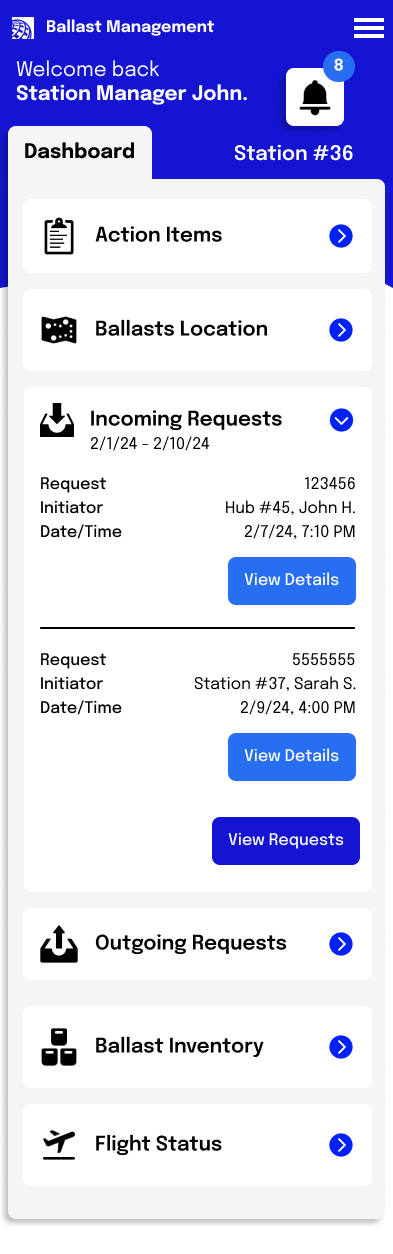
Tarmac workers operate in fast paced physical environments out on the runway where they cannot be tied to a desktop computer. I designed targeted mobile applications so they could instantly log ballast movements and report their safety recommendations up to the Hub Managers directly from the field. Designing for this specific environmental constraint was the primary factor in successfully eliminating handwritten notes and reducing manual entry errors by over 40 percent.
-
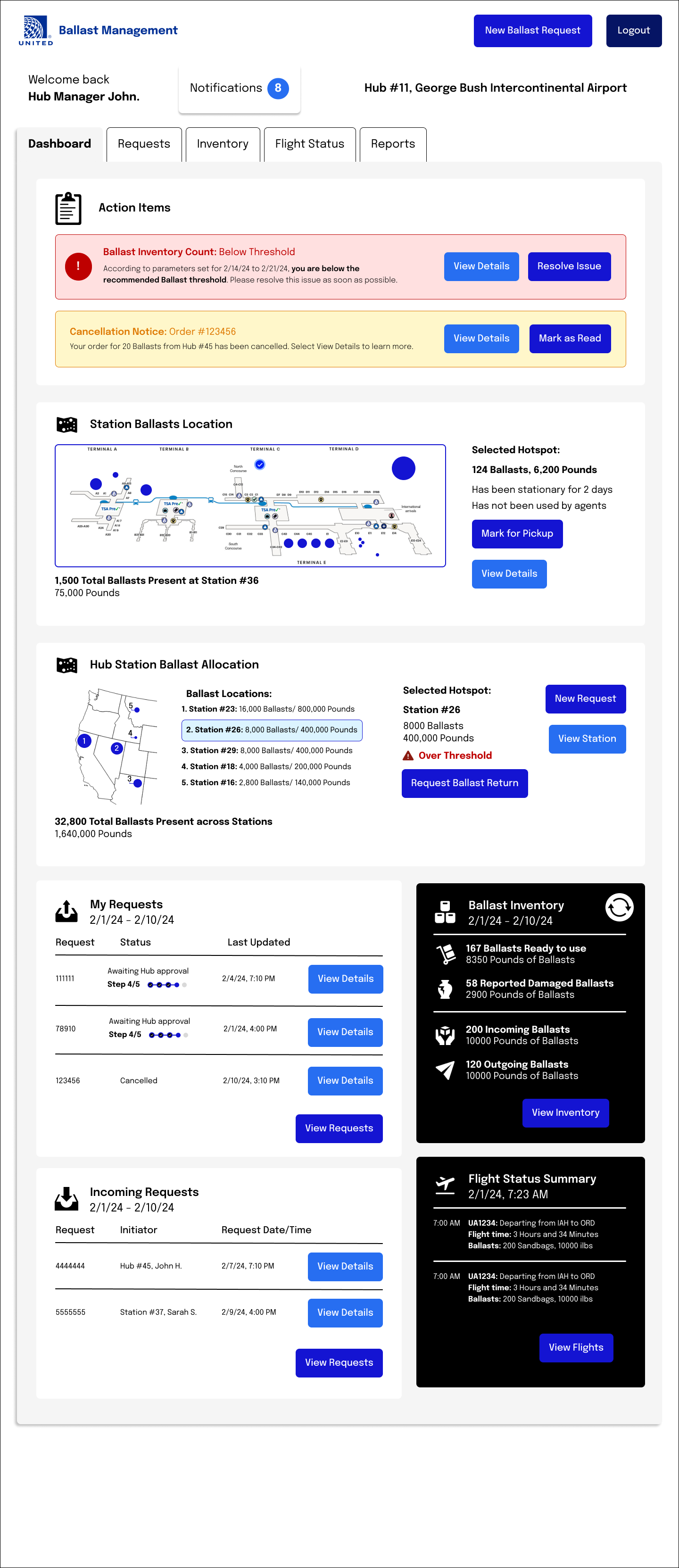
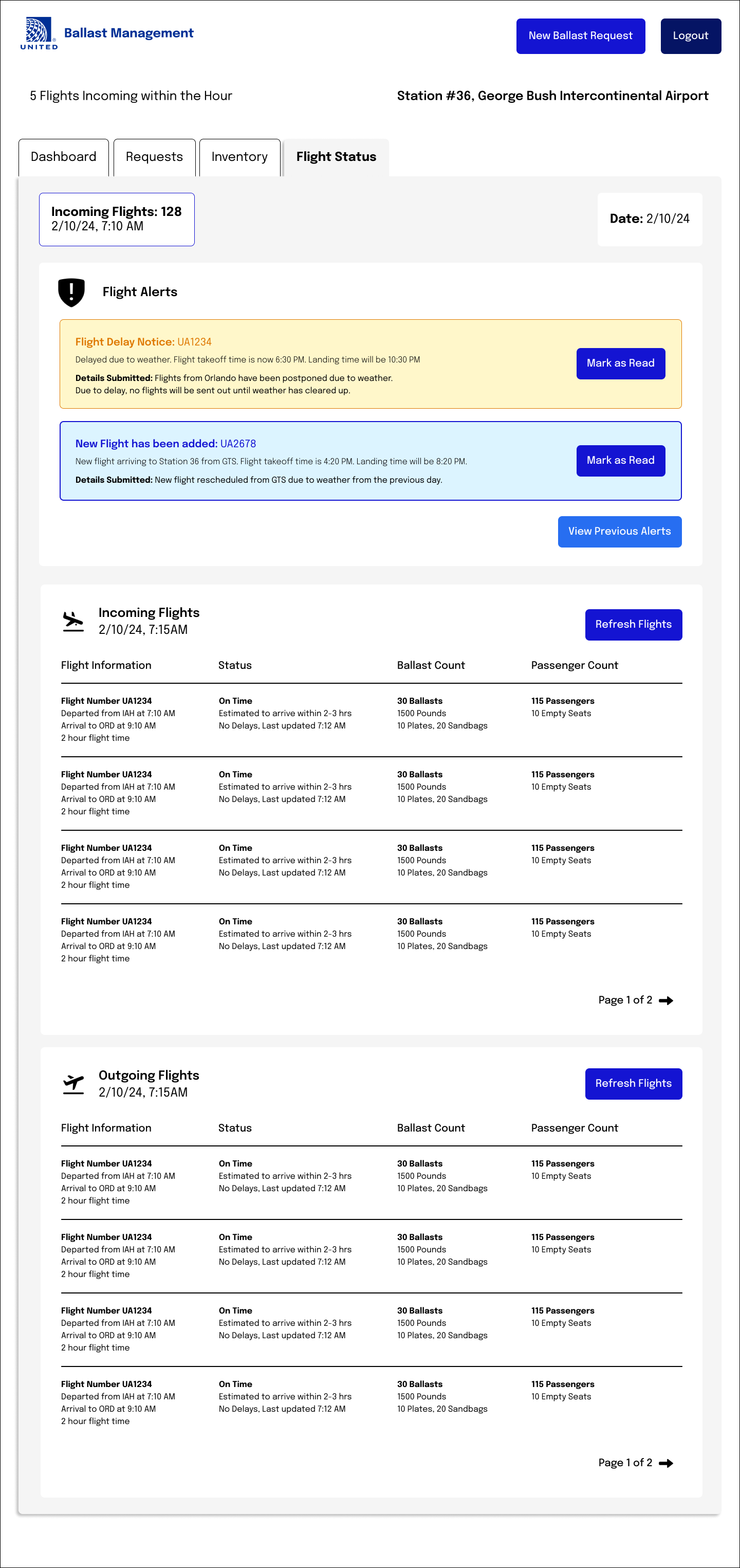
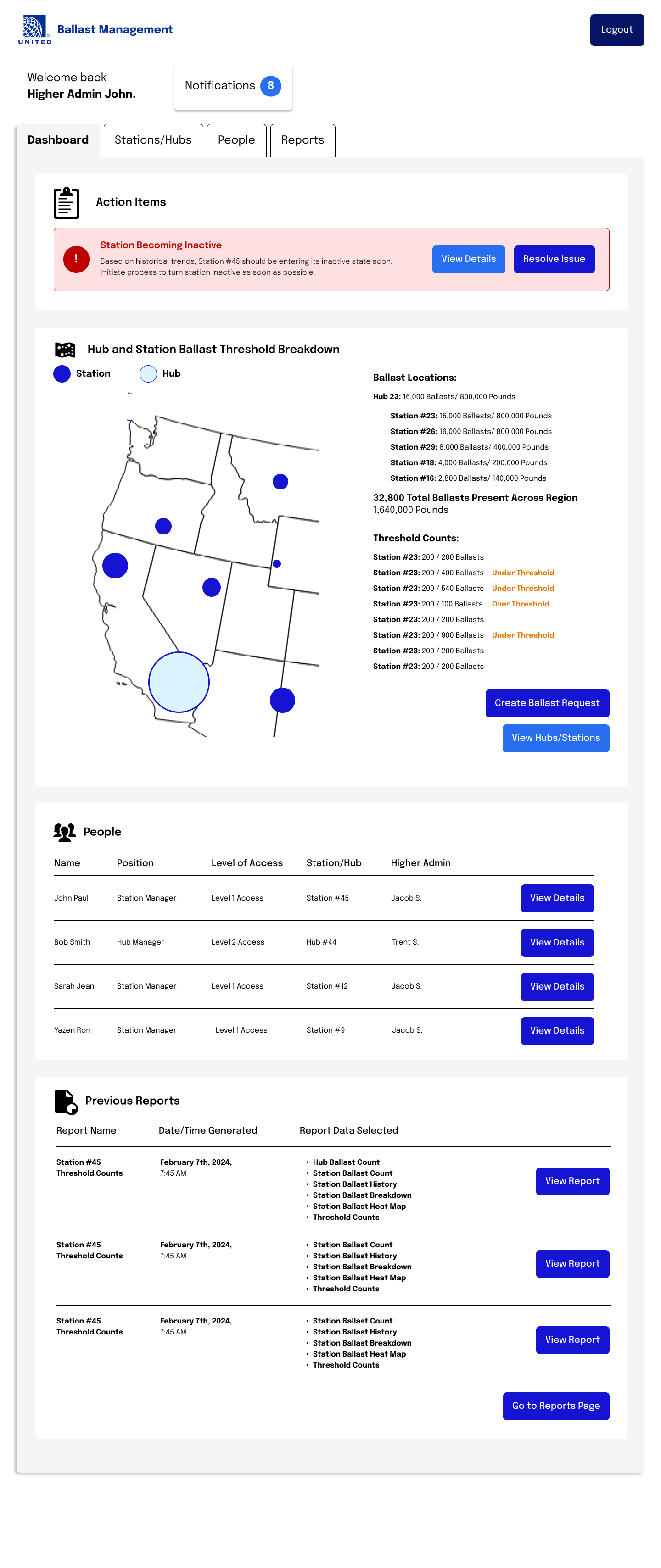
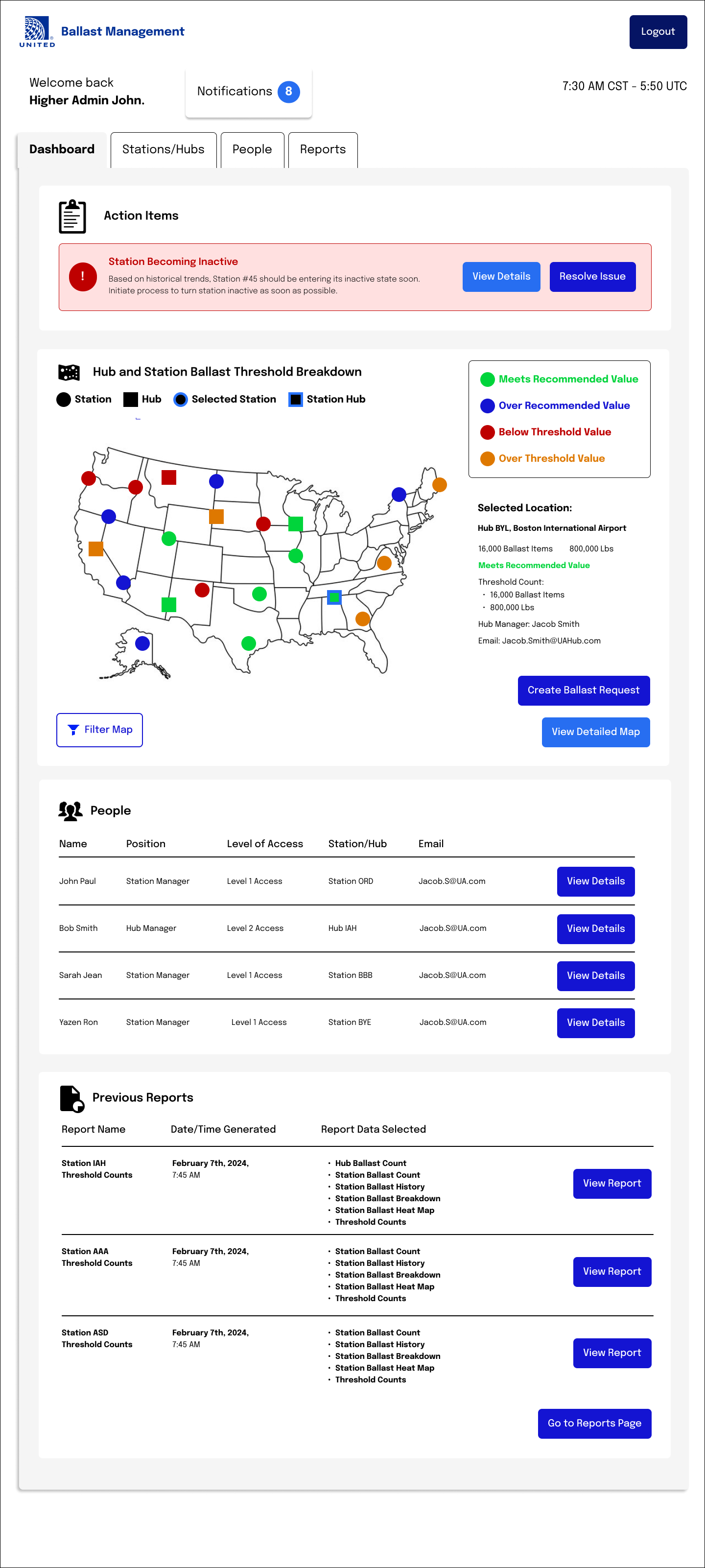
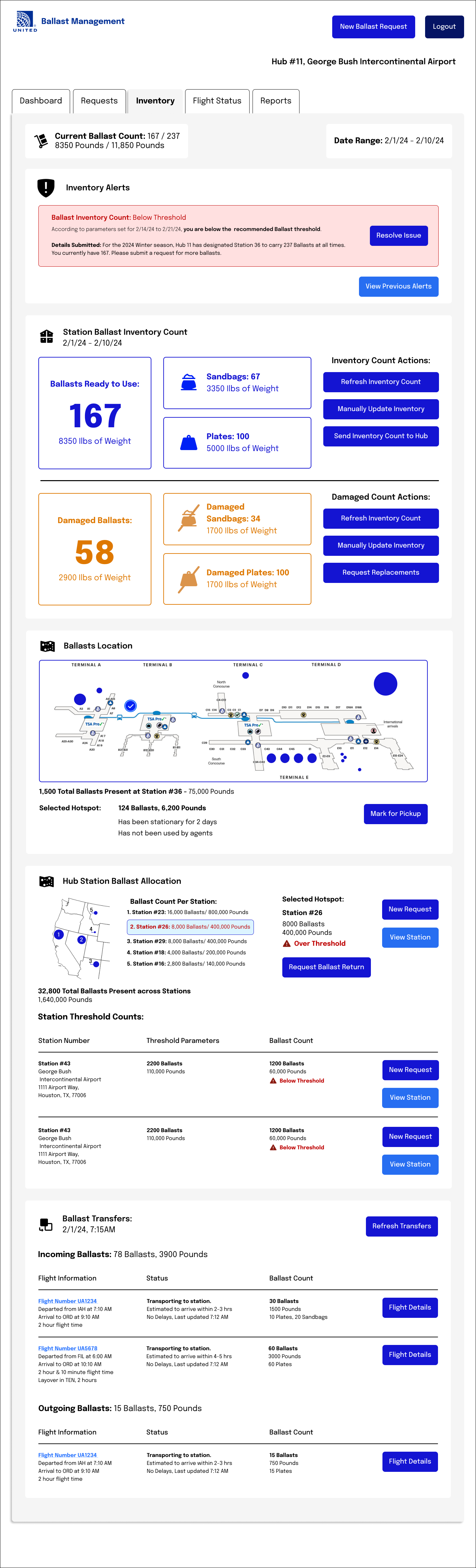
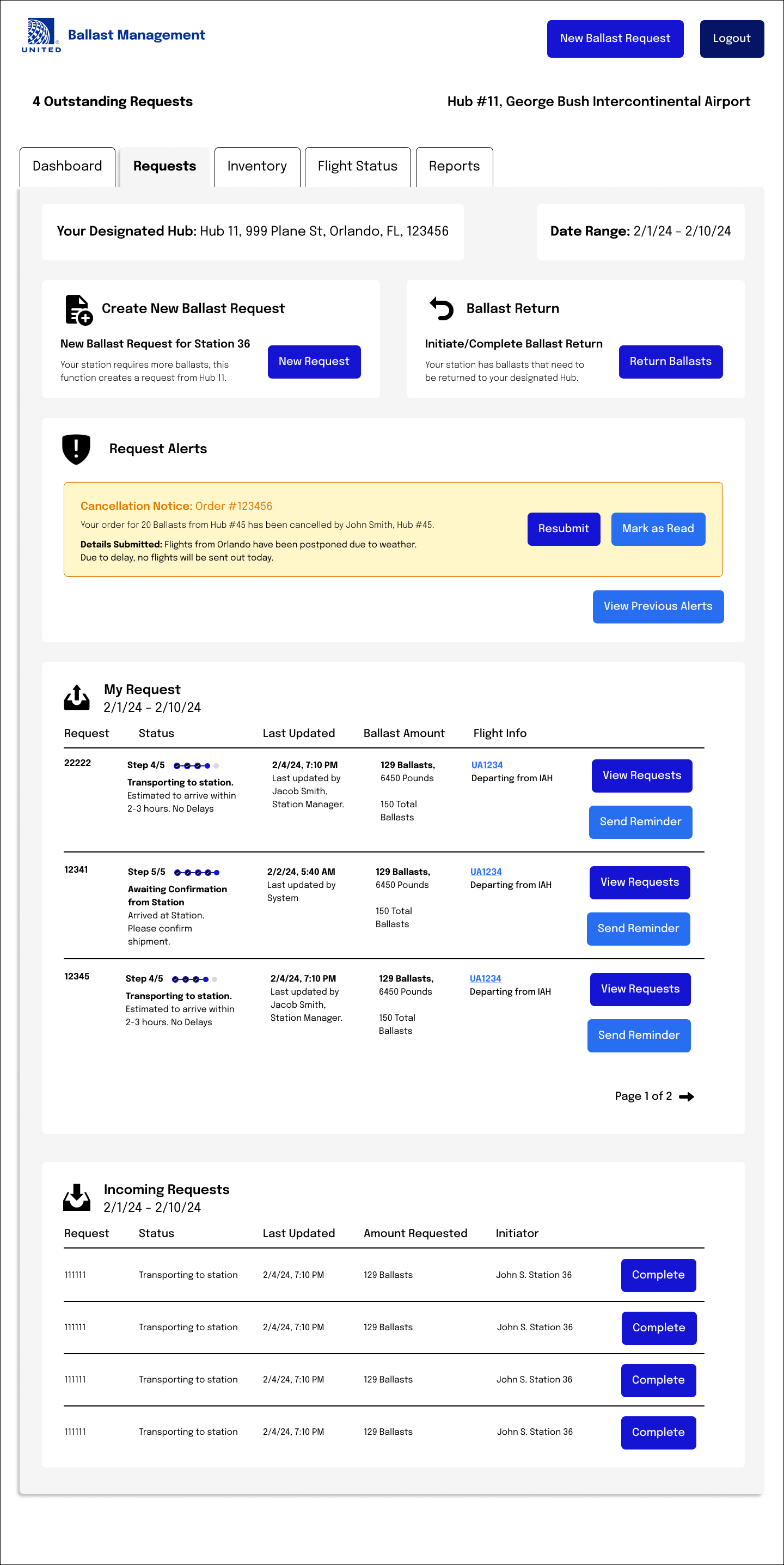
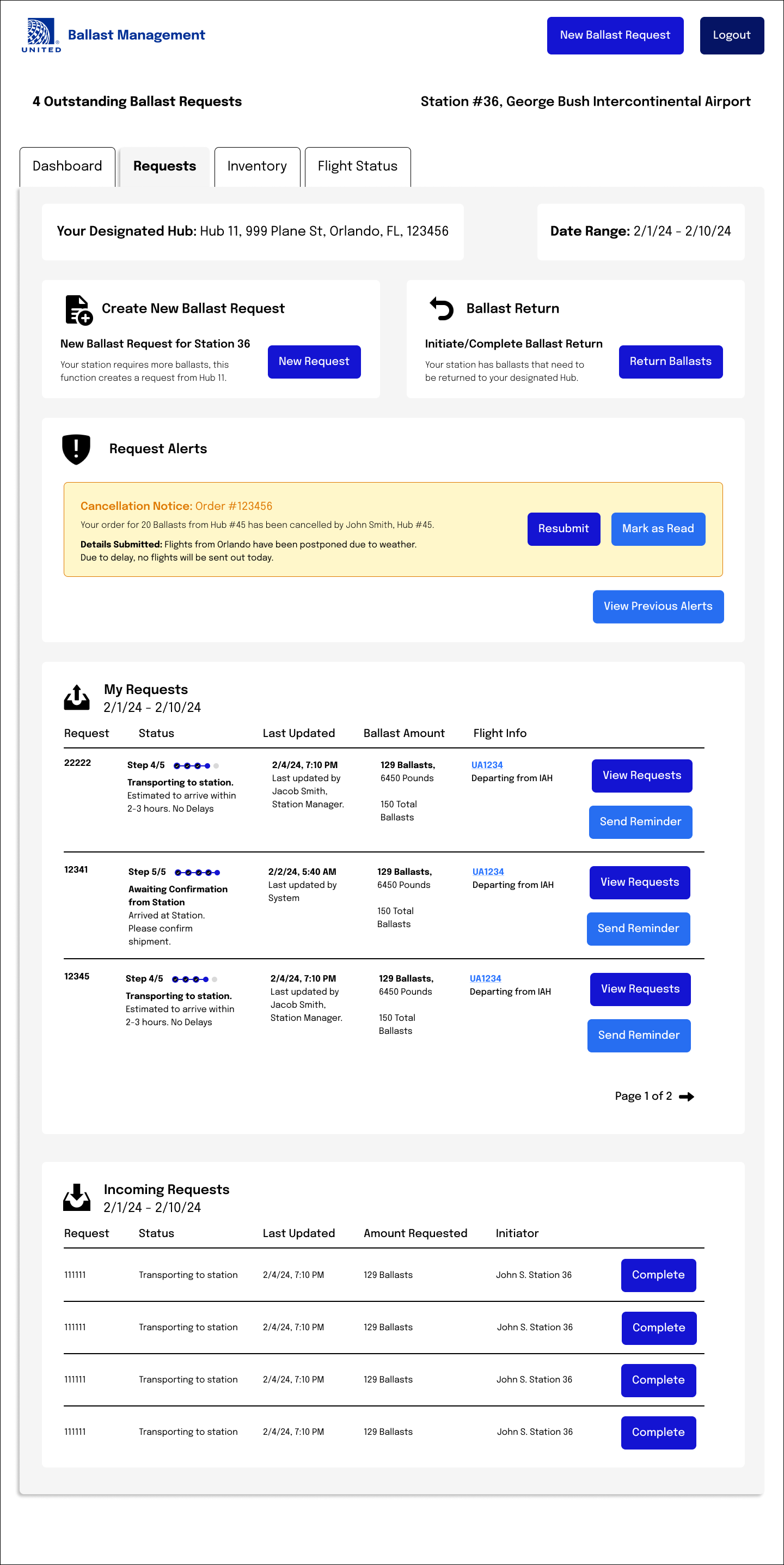
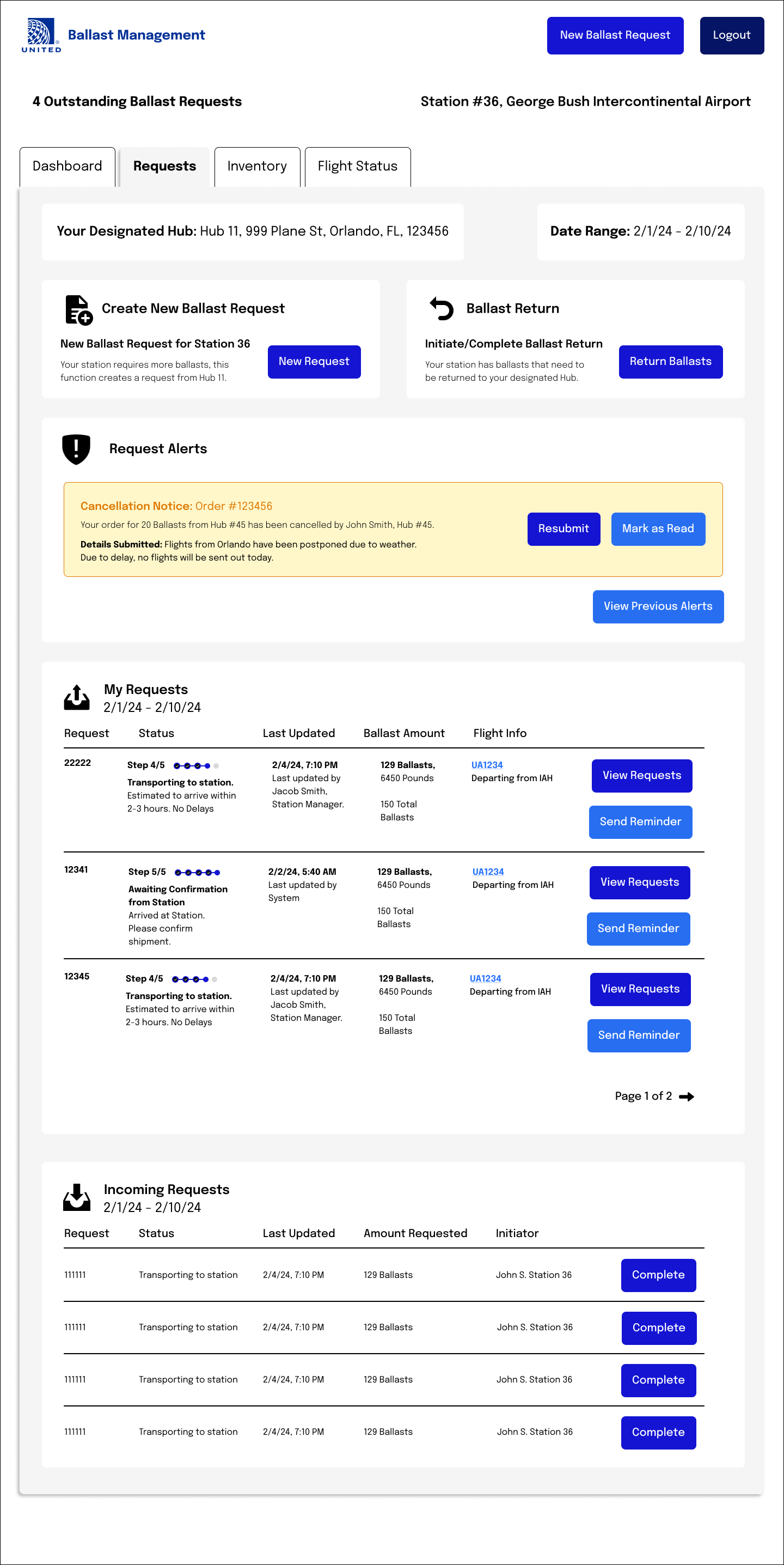
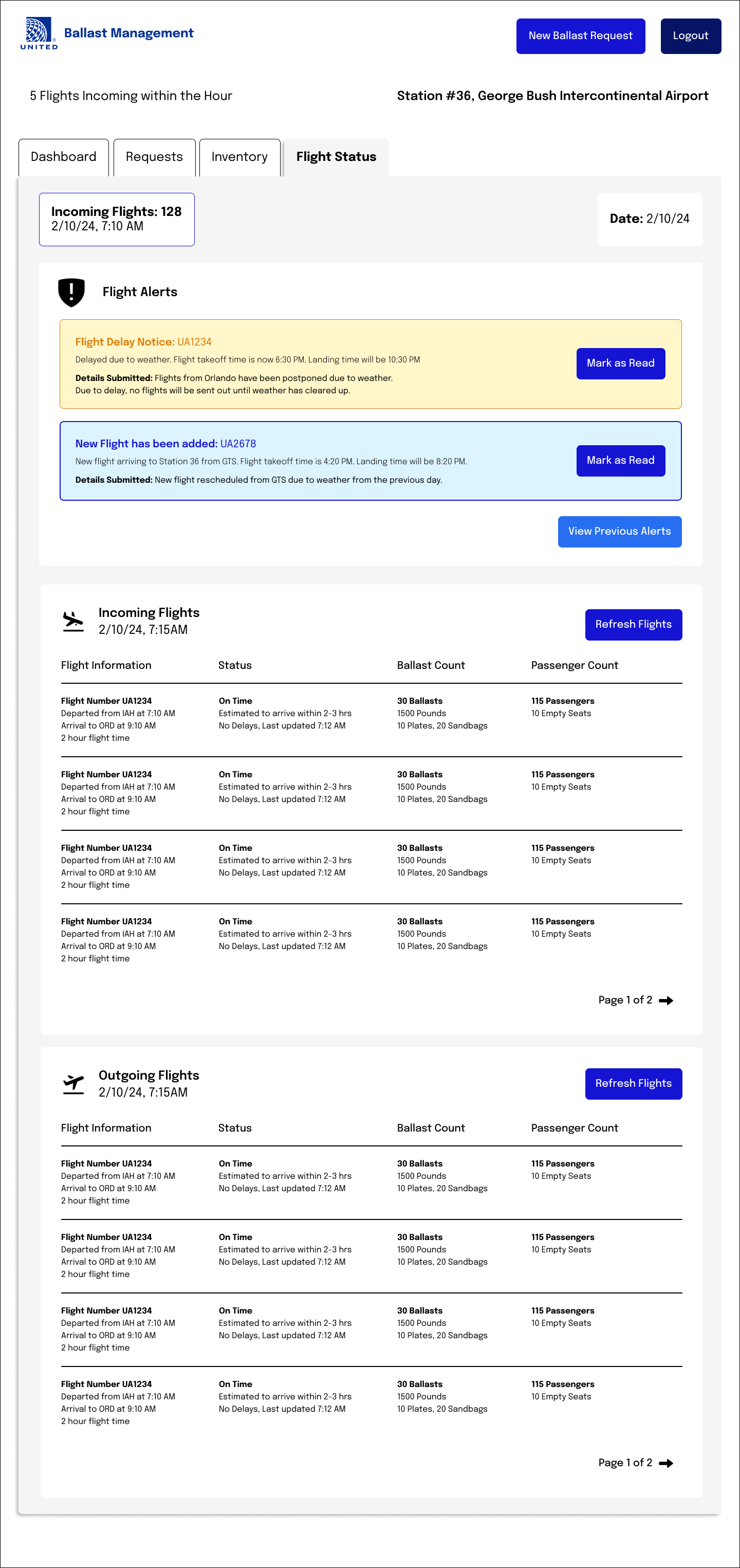
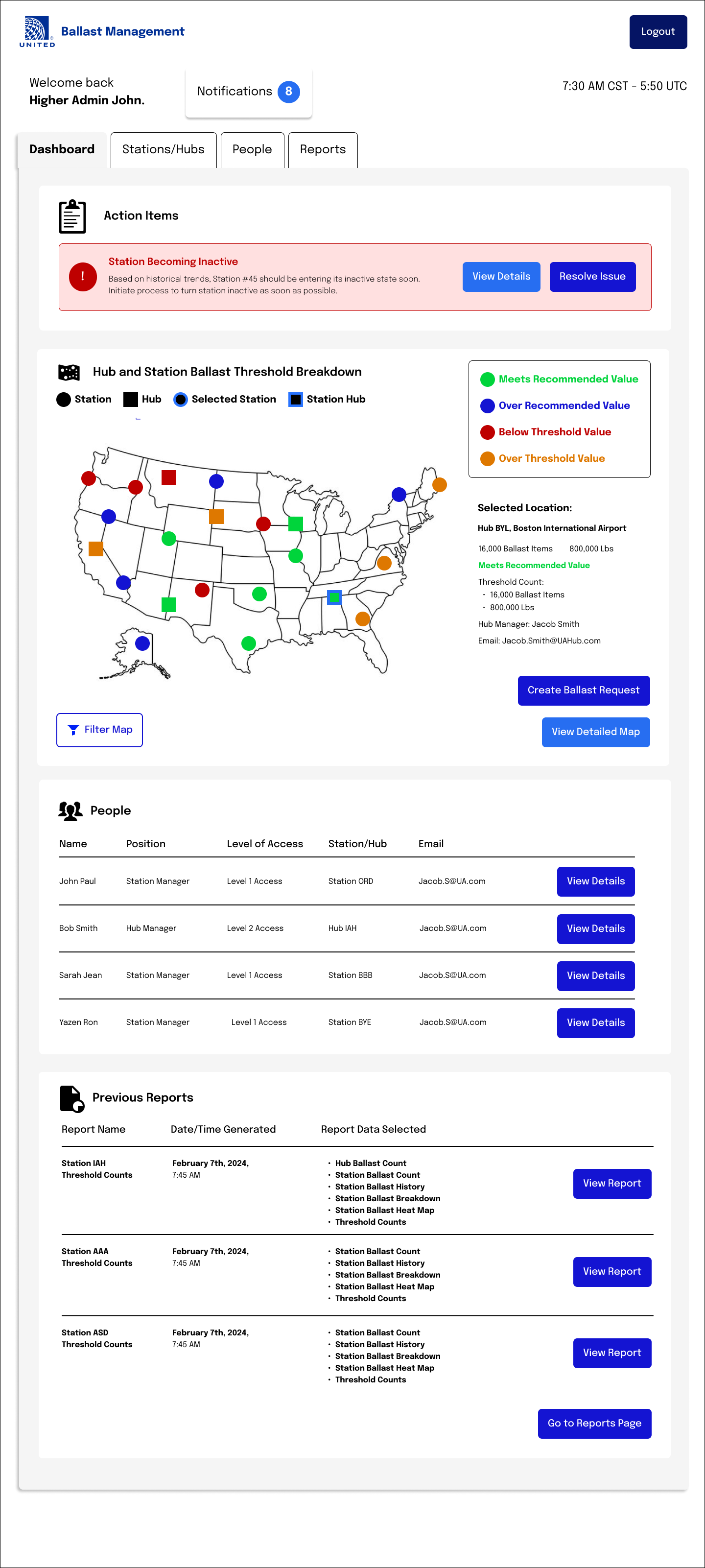
To stop the daily loss of critical equipment, management needed real time visibility. I designed these complex dashboards to translate raw backend RFID data into actionable logistics for both Hub and Regional Managers. This provided them with the clear visual tools required to seamlessly manage incoming and outgoing ballasts, approve regional acquisition requests, and coordinate safe transport across the country without relying on easily lost email threads.
-
Because this was a completely new digital tracking initiative, the interface needed a structural foundation that could scale as the RFID program expanded. I built a unified component library to ensure visual consistency across the mobile screens and the desktop dashboards. This not only sped up our collaboration with engineering but guaranteed the interface remained clear, reliable, and legible for users operating under strict flight readiness deadlines.