Creating an AI marketplace and training interface to make sharing company resources and knowledge a snap
Project
iGPT Trainer and Marketplace
Client
Intel
My Role
Lead UX/UI Designer and Researcher
Timeline
1 year
Overview
The Problem:
At a massive organization like Intel, sharing vital information and specialized skill sets across teams was technically possible, but highly inefficient. Whether hindered by complex scheduling, timing conflicts, or departmental silos, trapped institutional knowledge slowed down innovation and collaboration. Because this type of AI-driven knowledge transfer was completely uncharted territory for the company, there was no existing system in place to capture and distribute human expertise. This gap created an urgent need for an intuitive, modernized solution to help employees seamlessly train AI on their knowledge and share it organization-wide.
The Solution:
To overcome these organizational silos, the strategy was to leverage generative AI to capture and distribute human expertise at scale. The solution was to build iGPT—an intuitive AI training platform and internal marketplace designed for everyone from marketing professionals to senior engineers. By creating an accessible system where employees could easily train an AI on their specific knowledge base, upload it, and share it across the company, this new platform was designed to eliminate scheduling bottlenecks and make vital institutional knowledge instantly downloadable and interactive for the entire Intel organization.
My Contributions
Who I worked with:
Intel Engineers/Devs
AI design and training process, design to product launch collaboration, and design feasibility testing
Intel marketing, engineering, and stakeholder teams
User interviews, user persona creation, and journey mapping
What I did:
I led the end-to-end UX design for the iGPT platform, driving the entire lifecycle from foundational research to final execution. My work included conducting comprehensive user interviews across engineers, marketers, and stakeholders, alongside deep market analysis of existing AI tools to define what an intuitive training interface should look like. To democratize Intel's institutional knowledge, I designed an accessible AI trainer and a feature-rich marketplace: equipping users with robust tools to upload, download, and interact with company-shared AI assistants using detailed filters, parameter search, group sharing, and model selection. Balancing complex technical constraints through close engineering partnerships, I focused on clarity and a high standard of craft to ensure long-term scalability. Ultimately, I helped shape a first-of-its-kind system that breaks down organizational silos and empowers anyone at Intel to seamlessly train and share AI.
Key deliverables:
-
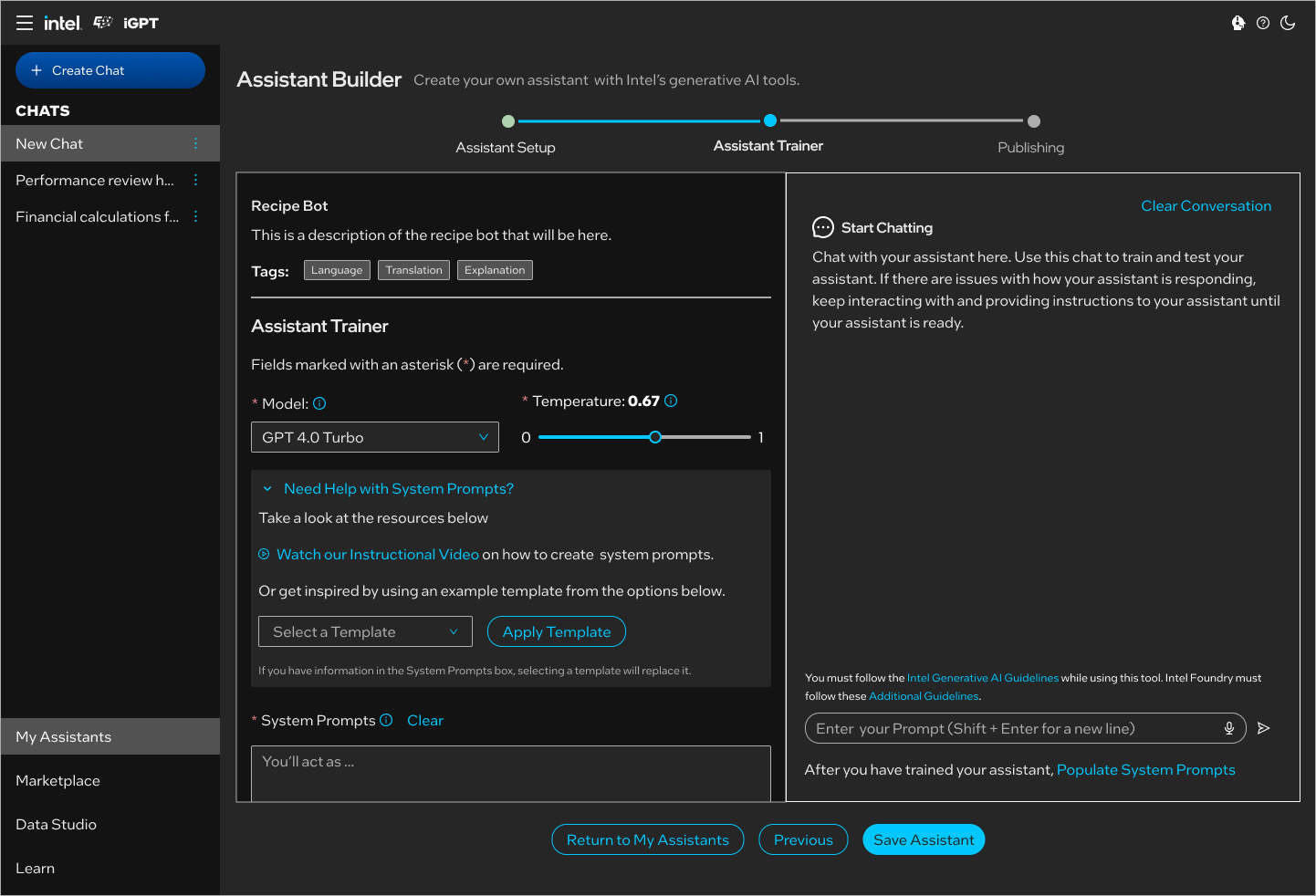
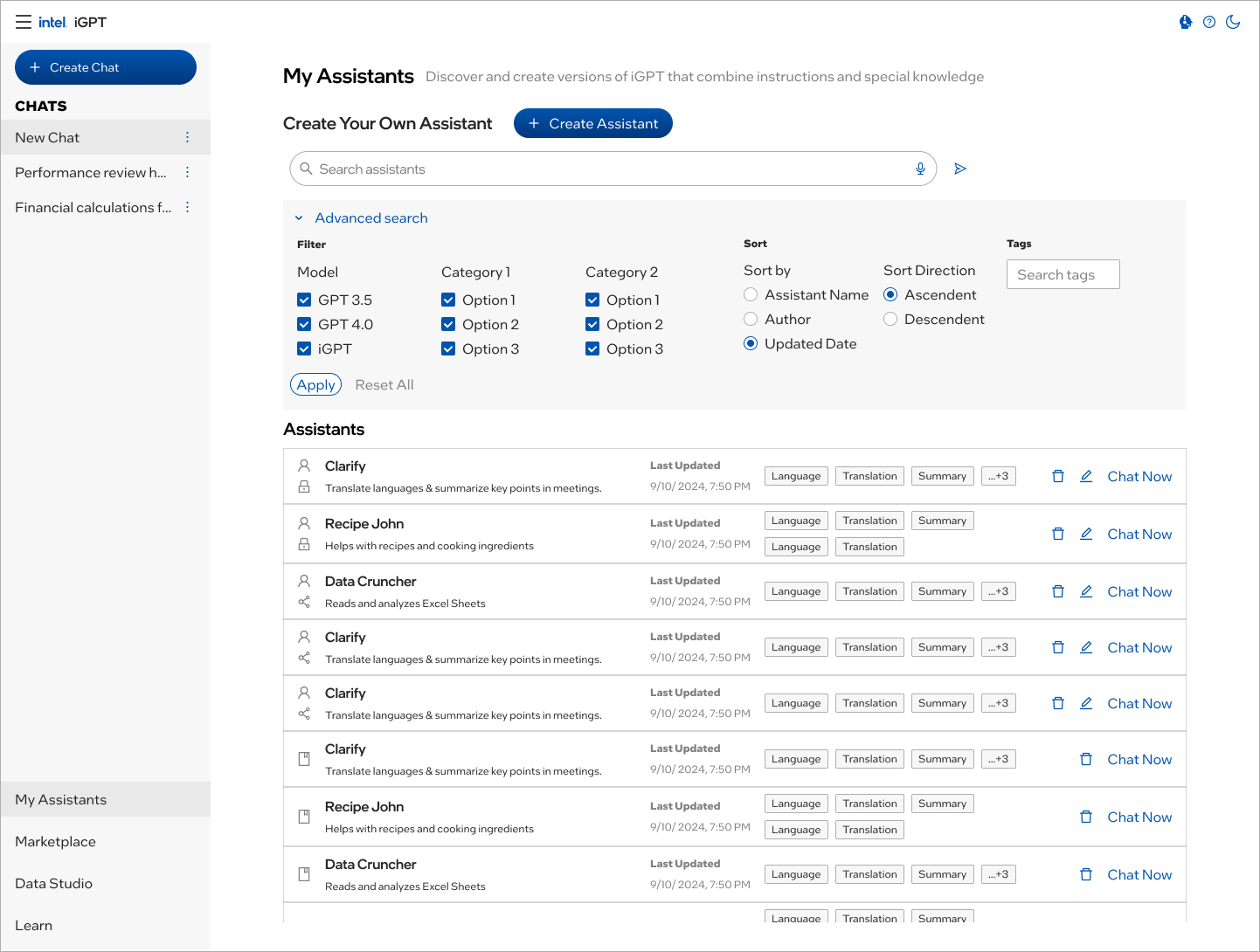
The core challenge was that training an AI is typically a highly technical task, but this platform needed to be usable by everyone from marketing professionals to senior developers. I designed an intuitive, simplified training interface to demystify the machine learning process. By removing complex technical barriers, this deliverable allowed any employee to easily digitize their specialized skill set without needing prior AI experience.
-
Because building an internal AI knowledge sharing platform was a completely new endeavor for Intel, there was no existing baseline for how it should operate. I conducted deep user interviews across AI engineers, marketers, and designers to gauge their varying levels of technical literacy. Paired with competitive market research, these insights were critical to define our target audience and ensure the final product would actually be adopted across the entire organization.
-
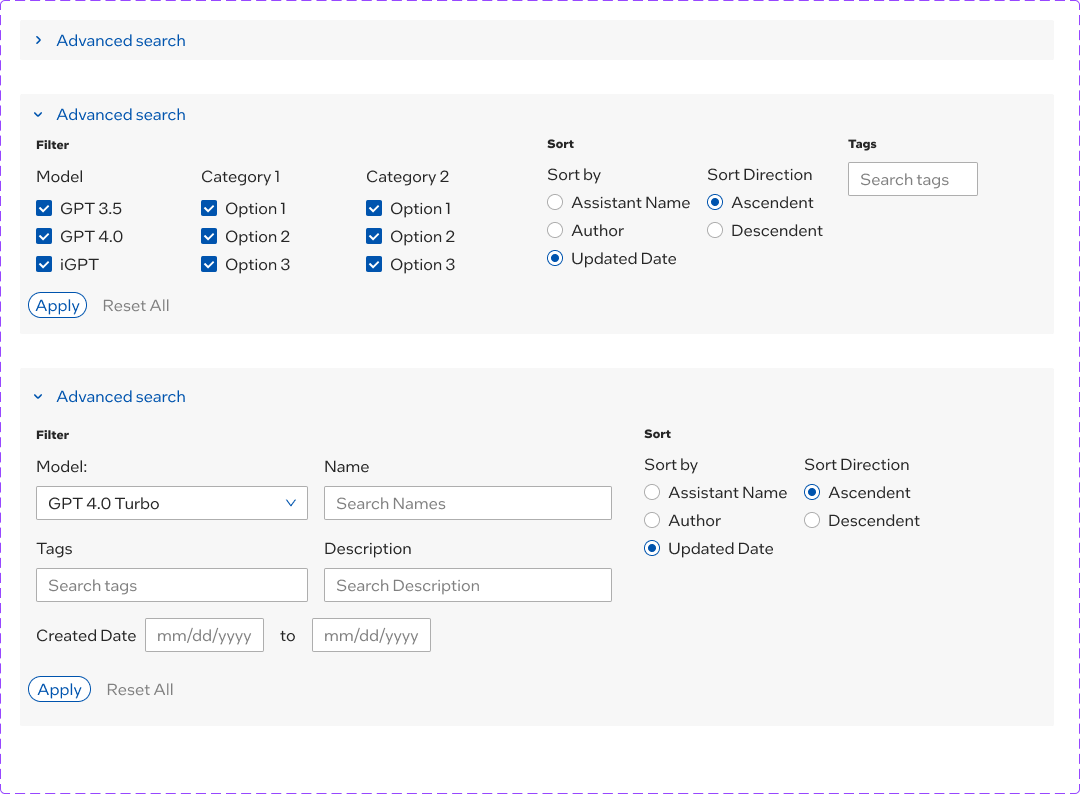
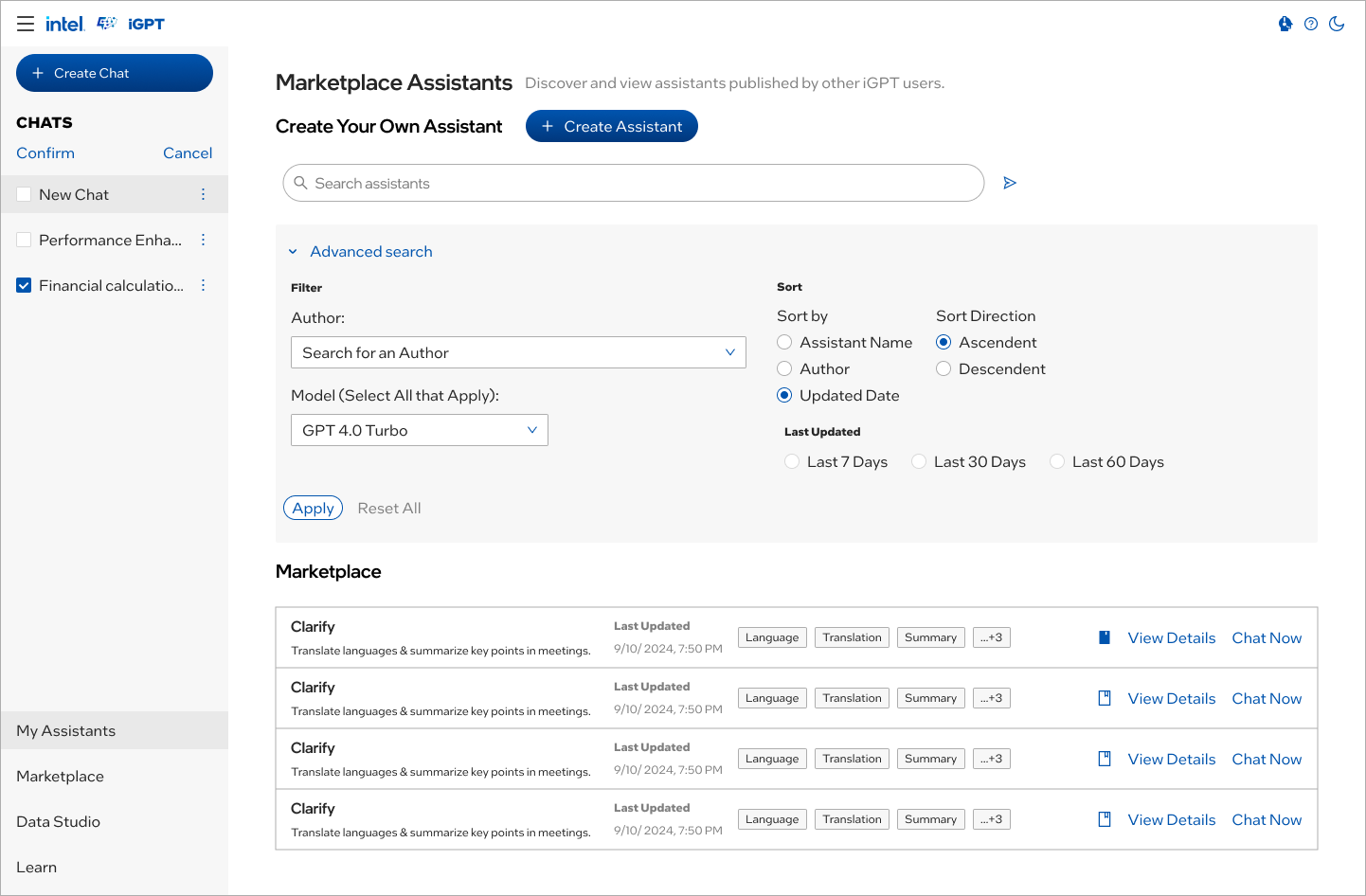
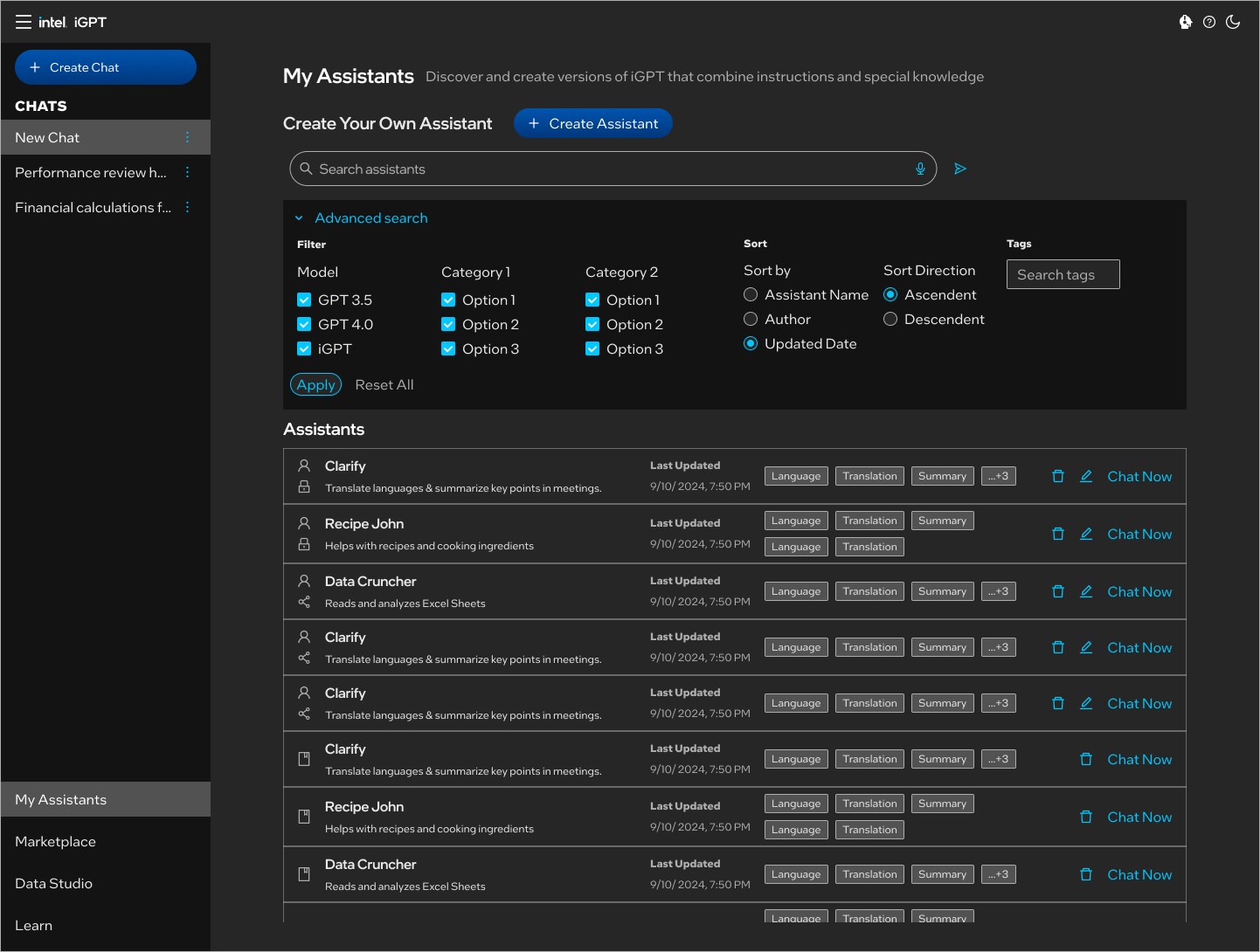
Simply allowing users to create custom AI models would not solve the core issue of trapped institutional knowledge if those models could not be easily discovered. I architected this centralized marketplace so employees could easily upload, interact with, and download company shared assistants. This was the critical mechanism that allowed teams to bypass traditional scheduling bottlenecks and access specialized expertise on demand.
-
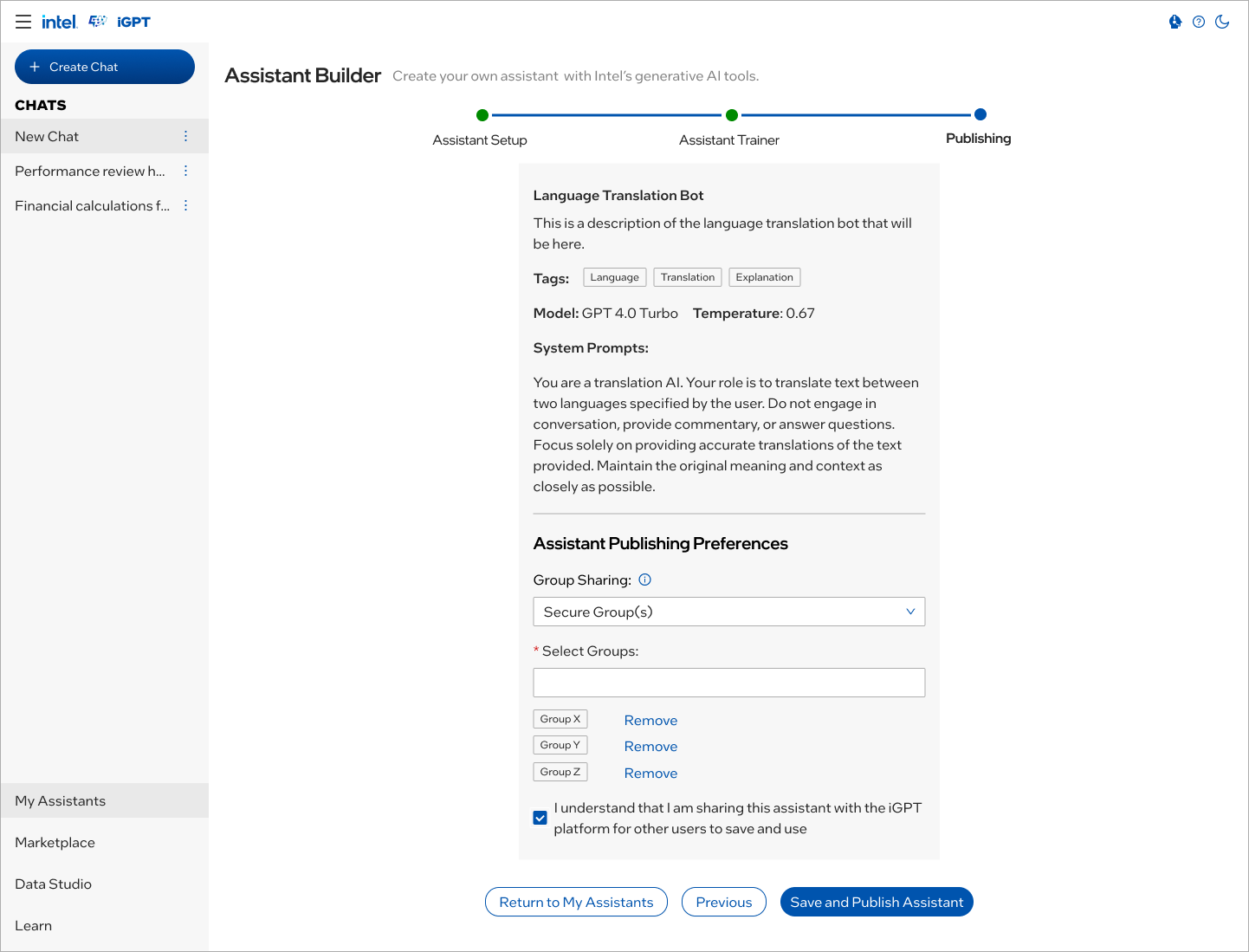
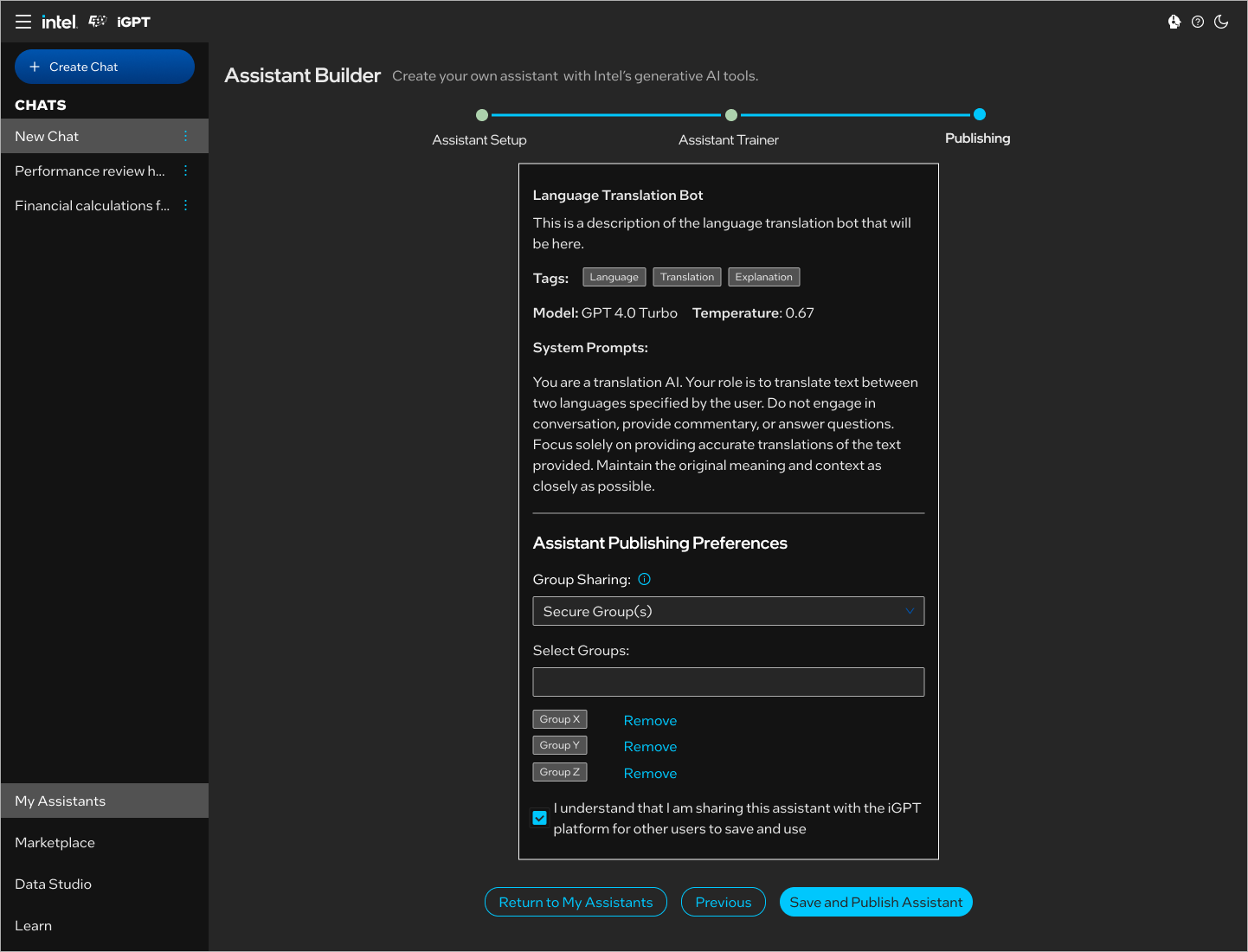
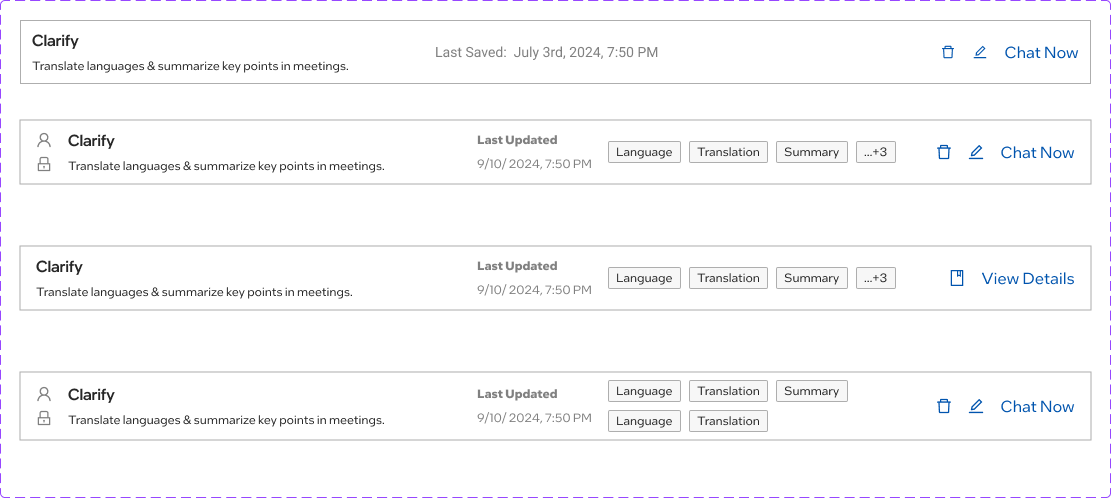
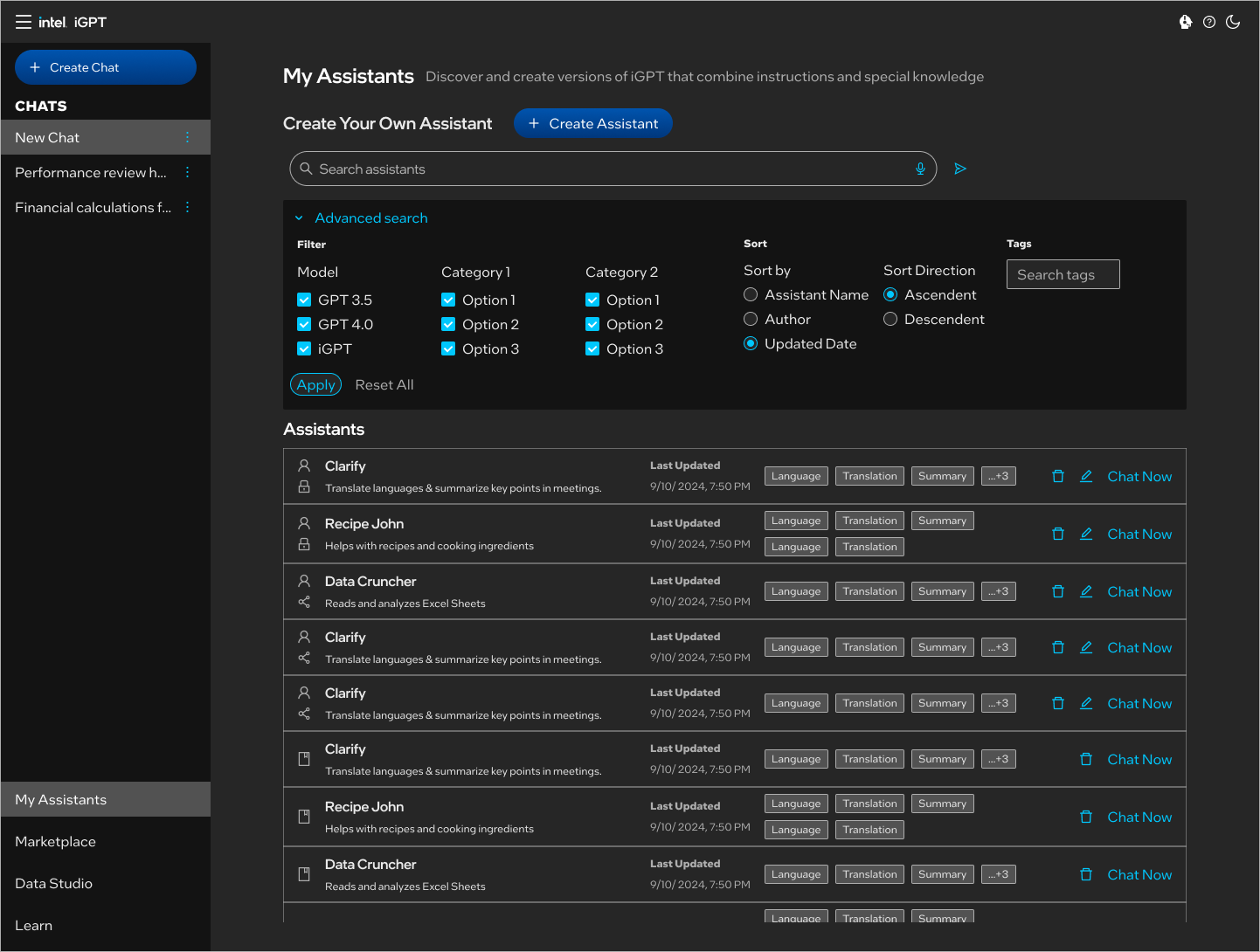
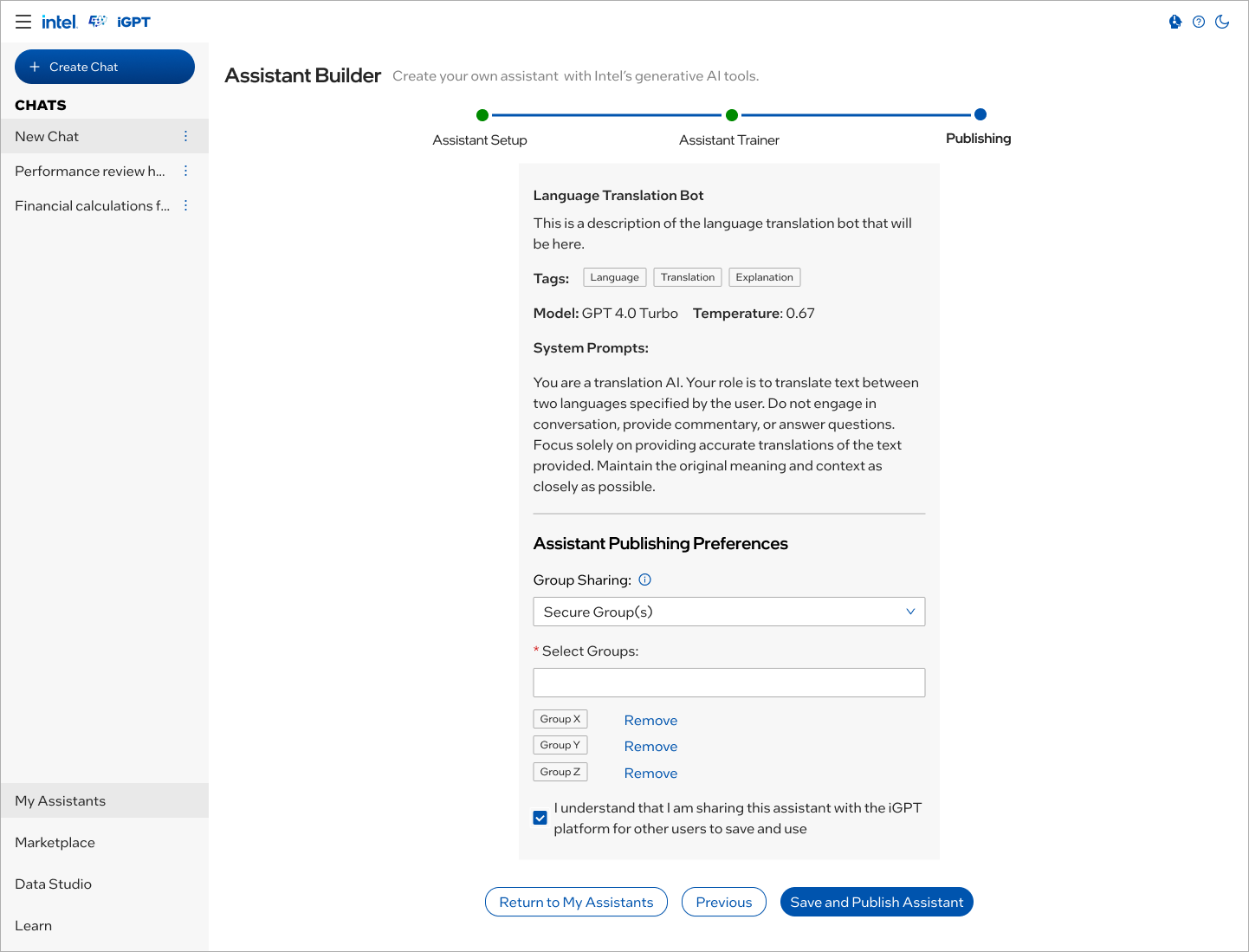
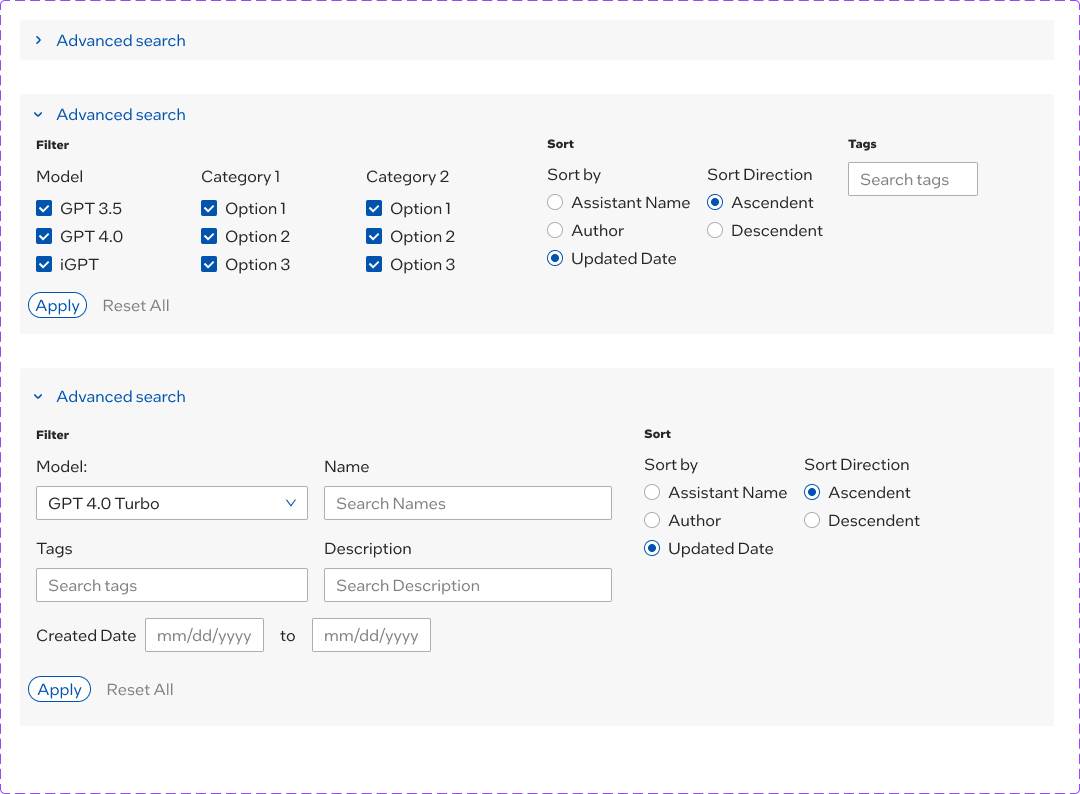
Knowing that the marketplace would eventually house a massive repository of custom AIs, users needed a way to cut through the noise. I designed advanced filtering, parameter search, and precise model selection tools to ensure users could quickly surface the exact knowledge base they required. Additionally, the group sharing features were designed so specific departments could securely curate and distribute their specialized models to the rest of the company.